As an Amazon Associate this site earns from qualifying purchases.
Specifications compared
| Product | Price | Camera | Stabilization | Stated flight time | Video transmission |
|---|---|---|---|---|---|
| DJI Mini 4K (1 battery) | Check price on Amazon | 4K UHD | 3-axis gimbal | 31 min max | 10 km |
| DJI Mini 4K Camera Drone Combo | Check price on Amazon | 4K UHD | 3-axis gimbal | 62 min max (2 batteries) | 10 km |
| DJI Mini 4K Fly More Combo | Check price on Amazon | 4K UHD | 3-axis gimbal | 93 min max (3 batteries) | 10 km |
| DJI Mini 5 Pro Fly More Combo | Check price on Amazon | 1-inch CMOS, 4K/60fps HDR | Gimbal, 225° roll rotation | Not stated | Not stated |
| RELIDOL PK01 FPV drone | Check price on Amazon | 1080P HD, 80° adjustable | Not stated | 25 min (2 batteries) | Not stated |
| Loiley 2K HD FPV drone | Check price on Amazon | 2K HD, 90° adjustable | Not stated (optical flow, altitude hold) | ~26 min (2 batteries) | Not stated |
Quick answer: For most people, the deciding specs are sensor and gimbal (that's video quality), takeoff weight (under 249 g means no FAA registration or Remote ID for recreational flying in the US), and how many batteries come in the box. If you want usable aerial footage rather than a toy, a 4K camera on a 3-axis gimbal — like the DJI Mini 4K, Drone with 4K UHD Camera for Adults, Under 249 g, 3-Axis Gimbal Stabilization, 10km Video Transmission, Auto Return, Wind Resistance, 1 Battery for 31-Min Max Flight Time at $229.00 — is the realistic entry point, and everything cheaper is a different category of product.
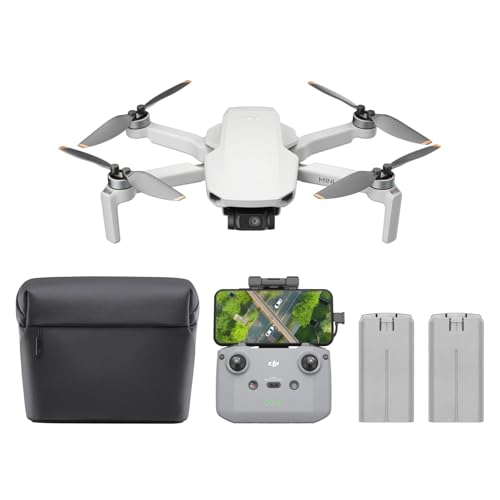
- No Registration Needed - Under 249 g, this drone with camera for adults 4K does not require FAA registration or Remote ID for recreational use. Visit the FAA's official website
- 4K Ultra HD & 3-Axis Gimbal for Cinematic Quality Shooting - Capture stunning moments in any light—sunrises, sunsets, and night scenes with crystal-clear 4K resolution. Thanks to
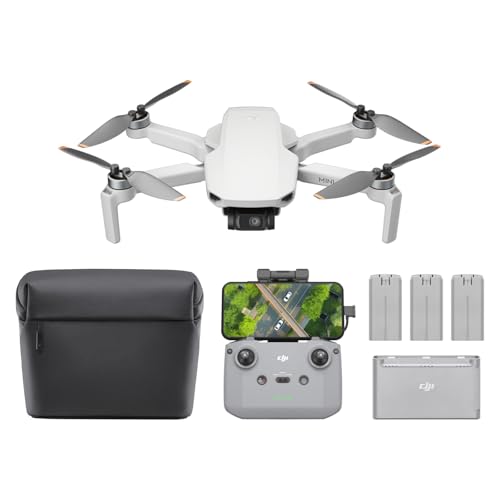
- No Registration Needed - Under 249 g, this drone with camera for adults 4K does not require FAA registration or Remote ID for recreational use. Visit the FAA's official website
- 4K Ultra HD & 3-Axis Gimbal for Cinematic Quality Shooting - Capture stunning moments in any light—sunrises, sunsets, and night scenes with crystal-clear 4K resolution. Thanks to
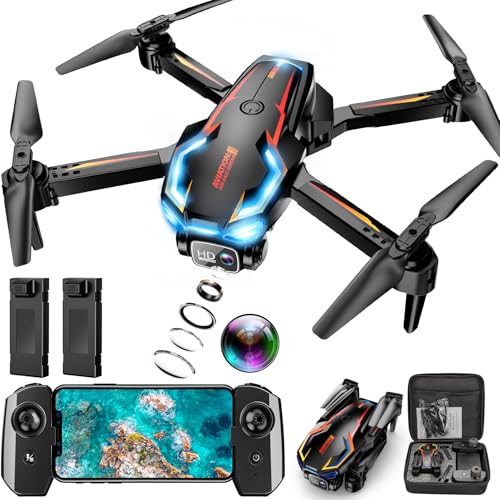
- 【2K Ultra HD Camera】Loiley drone features a high-quality 2K HD camera with a 90° remote adjustable angle, allowing you to capture breathtaking photos and ultra-clear videos from
- 【User-friendly & Optical Flow Positioning】 The Loiley drone operation is magically simple—press the one-touch start/land button to begin flying. With headless mode and gravity
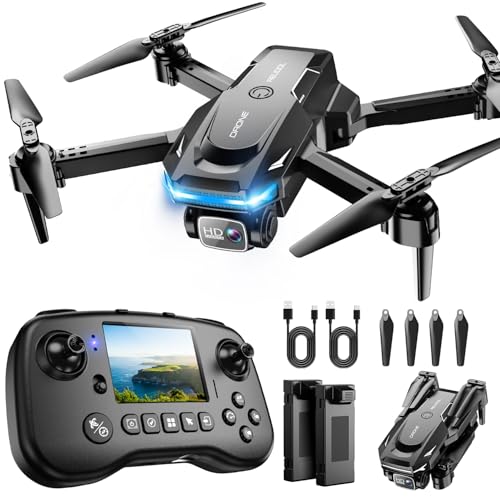
- The PK01 drone's remote comes with a super handy built-in screen—no phone needed—so you can watch live HD footage and check flight stats right in your hands. (An SD card is
- 【Drone with Camera】 Equipped with a 1080P HD 80°adjustable lens, the drone not only assists you in catching every wonderful moment from a bird's-eye perspective but is also
The four specs that actually matter
1. Stabilization, not resolution. A "4K" number on a listing means nothing if the camera is bolted to the airframe. A mechanical 3-axis gimbal physically cancels out the drone's pitch, roll and yaw, which is why footage from a gimballed drone looks smooth and footage from a fixed-mount drone looks like a shaky phone video with wind noise. If a listing doesn't say "gimbal," assume there isn't one — digital or electronic stabilization crops your frame and still jitters.
2. Sensor size, then resolution. Resolution tells you pixel count; sensor size tells you how much light those pixels collect. That's what governs dynamic range and low-light noise — sunrise, sunset, and blue-hour shots. A 1-inch CMOS sensor, as in the DJI Mini 5 Pro Fly More Combo, is a meaningfully larger class of sensor than what sits in sub-$350 drones. Frame rate matters too: 4K/60fps gives you the option of half-speed slow motion in a 30fps timeline.
Finding the right how to choose camera drone buyers guide comes down to matching the features to how you will actually use it.
3. Weight, because it's a legal spec. Under 249 g is the line where US recreational flyers skip FAA registration and Remote ID. Check the FAA site for current requirements, but this is why the sub-249 g class exists at all and why it dominates travel-focused buying.
4. Batteries, because flight time is a lie in the singular. Manufacturer flight times are best-case, no wind, no hovering, no repositioning. Real shooting eats it faster. Combo packs exist for exactly this reason — the same DJI Mini 4K airframe is sold with 1, 2 or 3 batteries at three different prices.
Who a gimballed 4K drone is for
Buy into the DJI Mini 4K class if you want footage you'll actually publish. That means travel creators cutting reels on a phone, real estate and property shots, hiking and van-life B-roll, wedding establishing shots, and anyone who wants aerial stills with enough detail to crop. The 3-axis gimbal and 4K capture are the two boxes you need ticked for that work, and 38 kph (Level 5) wind resistance with brushless motors is what keeps a sub-249 g aircraft usable on a coastline or ridge rather than only in a park on a still day.
It's also the right class if you fly somewhere scenic and want distance — 10 km of HD video transmission with anti-interference means the link isn't the limiting factor on a normal shoot; your line of sight and local rules are.
Who should skip it
Skip a gimballed camera drone if any of these describe you:
- You want a toy, not a camera. If the goal is flips, indoor buzzing around, or a gift for a teenager, you're paying a large premium for stabilization you won't use.
- You've never flown and expect to crash. Learning on a $229–$339 aircraft is expensive tuition. A cheap trainer with propeller guards is the honest first purchase.
- You're an Android user who wants a frictionless setup. DJI states the DJI Fly app has been removed from Google Play over a platform compatibility issue and must be downloaded from DJI's official website. That's a real extra step; iPhone users aren't affected.
- You need professional deliverables now. Client work with heavy grading wants a bigger sensor and higher frame rates, which means the Mini 5 Pro tier or above.
Honest trade-offs
The sub-249 g class buys you legal simplicity and pocketability, and it pays for that with physics. A light aircraft is more wind-affected than a heavy one, and small sensors struggle as the light drops. Stated flight times assume favourable conditions.
Combo pricing is the other trade-off worth thinking through. Going from the single-battery DJI Mini 4K to the three-battery Fly More Combo is $110.00 for two extra batteries and the bundle's accessories. If you shoot one location per outing, the base kit is fine. If you drive an hour to a location, one battery will frustrate you.
And the jump to a 1-inch sensor is a jump in price of roughly 3x over the top Mini 4K bundle. That's justified by HDR, 60fps, omnidirectional obstacle sensing, and vertical filming — not by "it's newer."
What to check on the listing before you buy
Listings change constantly, so verify these yourself rather than trusting any guide, including this one:
- Which variant is in the cart. The DJI Mini 4K exists as a 1-, 2- and 3-battery configuration at three prices. It is very easy to buy the wrong one from a shared listing.
- Current price. Every figure here is a snapshot; drone pricing moves with releases and sales events.
- What's actually in the box. Whether an SD card is included matters — the RELIDOL PK01, for example, requires one to save photos and video and does not include it.
- Warranty and after-sales terms, plus who the seller is.
- Recent buyer reviews and Q&A, especially any mentioning app compatibility with your specific phone OS. Read them yourself; that's where setup friction shows up first.
Drone with Camera, Screen on Controller Remote Control Quadcopter FPV Drone — consider instead if…
…you want a first drone you won't be devastated to crash. At $59.97, the Drone with Camera, Screen on Controller Remote Control Quadcopter FPV Drone puts a screen in the controller so you don't need a phone at all, runs brushless motors, and includes propeller guards, a child lock, emergency stop and a low-power alarm. The camera is 1080P on an 80° adjustable mount, and there's no gimbal listed — treat it as flight practice with a camera attached, not as a filming tool.
Drone with Camera for Adults, 2K HD FPV Drones with Upgrade Altitude Hold, One-Key Take Off/Landing, Speed Adjustment, Headless Mode, 2 Batteries, Toys Gifts for Teen Boys Girls, Beginner — consider instead if…
…you're buying a gift or want the cheapest legal-weight flyer. The Drone with Camera for Adults, 2K HD FPV Drones with Upgrade Altitude Hold, One-Key Take Off/Landing, Speed Adjustment, Headless Mode, 2 Batteries, Toys Gifts for Teen Boys Girls, Beginner is $39.98, folds to 5 x 3 x 2 inches, weighs under 250 g, and uses optical flow positioning plus altitude hold to stay put. Two batteries give roughly 26 minutes. Again: no gimbal is stated.
DJI Mini 4K Camera Drone Combo — consider instead if…
…you like the base Mini 4K but know one battery won't cut it. The DJI Mini 4K Camera Drone Combo, Drone with 4K UHD Camera for Adults, Under 249 g, 3-Axis Gimbal Stabilization, 10km Video Transmission, Auto Return, 2 Batteries for 62-Min Max Flight Time, QuickShots is the same aircraft at $299.00 with a second battery for 62 minutes max and QuickShots automated moves.
DJI Mini 4K Fly More Combo — consider instead if…
…you travel to shoot and want a full day out of one trip. The DJI Mini 4K Fly More Combo, Drone with 4K UHD Camera for Adults, Under 249 g, 3-Axis Gimbal Stabilization, 10km Video Transmission, Auto Return, 3 Batteries for 93-Min Max Flight Time, QuickShots is $339.00 with three batteries for a 93-minute maximum.
DJI Mini 5 Pro Fly More Combo — consider instead if…
…image quality is the whole point and budget is secondary. The DJI Mini 5 Pro Fly More Combo With DJI RC 2, 1-Inch CMOS is $989.00 and brings a 1-inch CMOS shooting 4K/60fps HDR, true vertical filming with 225° gimbal roll, forward LiDAR plus vision sensors for omnidirectional obstacle sensing including night flights, ActiveTrack 360°, 42 GB of internal storage, and the DJI RC 2 controller.
FAQ
What specs actually matter for video quality? In order: mechanical gimbal, sensor size, frame rate, then resolution. A 1-inch sensor at 4K/60fps HDR outclasses a small-sensor 4K/30 camera even though both say "4K."
Do I need to register my drone? DJI states that its under-249 g models don't require FAA registration or Remote ID for recreational use. Rules change and vary by country and by whether you fly commercially — check the FAA's official site before your first flight.
Is a cheap drone a reasonable way to start? Yes, if you frame it as learning to fly rather than learning to film. Guards, headless mode and altitude hold make the first few flights survivable, and you'll transfer those stick skills straight to a camera drone.
What's the single most common buying mistake? Buying resolution instead of stabilization, then discovering the footage is unusable. The second most common is buying a one-battery kit for a hobby that needs three.
Related guides
- Comparing Your Best drones, gimbals and content creator gear - camera drones, smartphone gimbals, action cameras, ring lights and stream decks Options
- How to Succeed with Best drones, gimbals and content creator gear - camera drones, smartphone gimbals, action cameras, ring lights and stream decks
- Best drones, gimbals and content creator gear - camera drones, smartphone gimbals, action cameras, ring lights and stream decks for Seniors
Key Takeaways
- Choosing the right how to choose camera drone buyers guide means matching the key features to your specific needs and budget
- Read real customer reviews and check the return policy before you commit
- Compare value across models — the priciest option is not always the best fit