As an Amazon Associate this site earns from qualifying purchases.
Comparison table
| Product | Price | Camera | Stabilization | GPS / Auto Return | Batteries & flight time | Weight |
|---|---|---|---|---|---|---|
| DJI Mini 4K | Check price on Amazon | 4K UHD | 3-axis gimbal | Auto Return | 1 battery, 31-min max | Under 249 g |
| DJI Mini 4K Fly More Combo | Check price on Amazon | 4K UHD | 3-axis gimbal | Auto Return | 3 batteries, 93-min max | Under 249 g |
| HOVERAir X1 | Check price on Amazon | 2.7K@30fps / 1080P HDR | Triple stabilization system | Not stated | ~11 min per battery | 125 g |
| Holy Stone HS175D | Check price on Amazon | 4K, 110° wide-angle | Not stated | GPS Auto Return-to-Home | 2 batteries, up to 46 min | Under 249 g |
| Scrubuz GPS Drone 2K HD | Check price on Amazon | 2K, 110° wide-angle | Not stated | GPS Auto Return-to-Home | 2 batteries, ~40 min total | Not stated |
| Velcase 1080P Drone | Check price on Amazon | 1080P FPV | Optical flow hover | Not stated | 2 batteries, time not stated | Not stated |
Quick answer: If you want the best all-round travel drone under $500, the DJI Mini 4K is the one to beat — 4K on a 3-axis gimbal, under 249 g, and $229 leaves room for accessories. If you'd rather film yourself hiking or skating without touching a controller, the HOVERAir X1 Drone with Camera, Follow-me Drone with Self-Flying Mode is the smarter buy, and if you're spending under $150 the Holy Stone HS175D gets you GPS return-to-home and 4K without the DJI price.
Under $500 is a genuinely good place to shop for a travel drone right now. The dividing line isn't really price — it's whether the camera sits on a mechanical gimbal or not, and whether the drone knows where it is via GPS. Everything below sorts into those two buckets, and that's the decision that should drive your pick.
DJI Mini 4K — Best Overall
The DJI Mini 4K is the default answer for most travelers, and the reason is the 3-axis gimbal. Software stabilization can smooth out a shaky clip; a mechanical gimbal stops the shake from being recorded in the first place. Paired with 4K Ultra HD capture, that's the difference between footage you post and footage you delete.
Finding the right best foldable travel drones under $500 comes down to matching the features to how you will actually use it.
It comes in under 249 g, which per the listing means no FAA registration or Remote ID for recreational use in the US — worth confirming against the FAA's own site before a trip, since rules change. Wind resistance is rated to 38 kph (Level 5), and brushless motors allow takeoff at altitudes up to 4,000 meters, which matters if your trips involve mountain passes rather than beaches. Video transmission is rated to 10 km.
The catch at $229 is that this set ships with one battery for a 31-minute max flight time. That's one solid session, not a full day. Also note the listing's own warning: the DJI Fly app has been pulled from Google Play, so Android users need to download it from DJI's site. Read the current reviews yourself to see how people are finding that install step.
DJI Mini 4K Fly More Combo — Best for Full-Day Shooting
Same aircraft, different box. The DJI Mini 4K Fly More Combo is $339 and includes 3 batteries for a 93-minute max flight time, plus QuickShots for automated cinematic moves.
The math is the whole argument here. You're paying $110 over the single-battery set for two extra batteries and roughly triple the airtime. If your trip is a weekend in one city, the base Mini 4K is plenty. If you're doing a two-week trip with long days away from an outlet, the Combo is the version you'll actually be happy with — one battery on a travel day tends to mean choosing between the sunrise shot and the sunset shot.
Everything else carries over: 4K UHD, 3-axis gimbal, under 249 g, 10 km max HD video transmission with anti-interference, Level 5 wind resistance, auto return.
HOVERAir X1 Drone with Camera — Best for Filming Yourself
The HOVERAir X1 Drone with Camera, Follow-me Drone with Self-Flying Mode isn't really competing with the others — it's a different tool. At 125 g it's lighter than an iPhone, it's FCC certified, it's foldable, and it launches from your palm with one click. No controller ritual, no setup.
It flies pre-programmed paths — Hover, Follow, Zoom Out, Orbit, Bird's Eye, and Manual Control — and tracks at up to 15 mph, which covers cycling, skateboarding and similar. Video tops out at 2.7K at 30fps, with 1080P HDR available, and a triple stabilization system handles smoothness.
Trade-offs are real. Each battery supports about 20 intelligent flight paths, roughly 11 minutes, so this is a grab-a-clip device rather than an explore-the-valley device. And 2.7K is a step below the DJI pair. But for solo creators who'd otherwise be propping a phone on a rock, $254 for a camera that flies itself is a fair deal.
Holy Stone HS175D — Best Value GPS Drone
At $127.49, the Holy Stone HS175D covers a lot of ground. It's foldable, comes in under 249 g, shoots 4K through a 110° wide-angle lens, and the camera tilts across a 90° range so you can frame a top-down or a wide landscape without repositioning the whole aircraft.
The features that matter on a trip are here: GPS-assisted flight with Auto Return-to-Home when signal drops, the drone goes out of range, or the battery runs low. That single feature is what separates a drone you fly confidently over unfamiliar terrain from one you fly nervously. It also has Follow Me, Circle Fly, Waypoint Fly and altitude hold, plus a brushless motor and 5GHz FPV live view.
Two batteries give up to 46 minutes total depending on conditions. What you don't get versus the DJI Minis is a mechanical gimbal — expect more motion in the footage on breezy days.
Scrubuz GPS Drone with Camera, 2K HD — Best Budget GPS Pick
The Scrubuz GPS Drone with Camera, 2K HD is $47.99 and still manages GPS positioning with precision Auto Return-to-Home triggered by low battery, lost signal or remote command, plus last-known GPS location and app flight-path recording to help you find it.
Camera is 2K over a 110° wide-angle lens on a 90° electric adjustable mount, with 5G Wi-Fi transmission and footage saved to a microSD card up to 64GB or straight to your phone. Brushless motors are rated for a 20,000-hour lifespan with Level 5 wind resistance, and two batteries give about 40 minutes total with charge levels visible on the remote's display.
One thing the listing itself flags: calibrate the compass every time you power on and after any crash, via the remote's calibration button or the HK66 DRONE FLY app. Skipping that on a GPS drone is how people lose them.
Velcase 1080P Drone with Camera — Best for First-Time Pilots
The Velcase 1080P Drone with Camera is $43.99 and honest about what it is: the listing says it's a beginner-level drone, not for professional aerial filming. That framing is exactly right.
What you get is a foldable kit with a carrying case, remote, propeller guards, spare blades and 2 rechargeable batteries. Flight aids are all the beginner ones — one-key takeoff and landing, altitude hold, headless mode, 3 speed modes so you can start slow, and optical flow positioning to steady the hover in open spaces or calm indoor areas. Camera is 1080P FPV through the Velcase VGO app, with an adjustable angle, plus 360° flips, gesture photo, trajectory flight, voice control and a low battery warning.
Buy this to learn stick control, or as a gift, without risking a $339 aircraft in a tree.
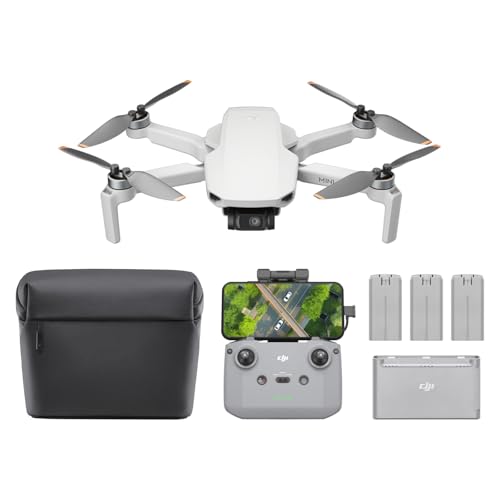
- No Registration Needed - Under 249 g, this drone with camera for adults 4K does not require FAA registration or Remote ID for recreational use. Visit the FAA's official website
- 4K Ultra HD & 3-Axis Gimbal for Cinematic Quality Shooting - Capture stunning moments in any light—sunrises, sunsets, and night scenes with crystal-clear 4K resolution. Thanks to
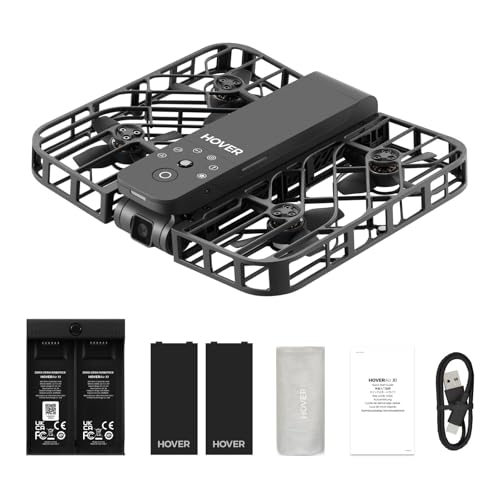
- Intelligent Follow-Me Camera: Harnessing advanced tracking algorithms and a following speed of up to 15 mph, the HOVERAir follow-me self-flying drone becomes your intuitive
- Wind Resistance and Altitude Performance: The Hover X1 is designed to withstand winds up to level 4 (7.9 m/s). Its flight performance may be compromised at altitudes above 2,000
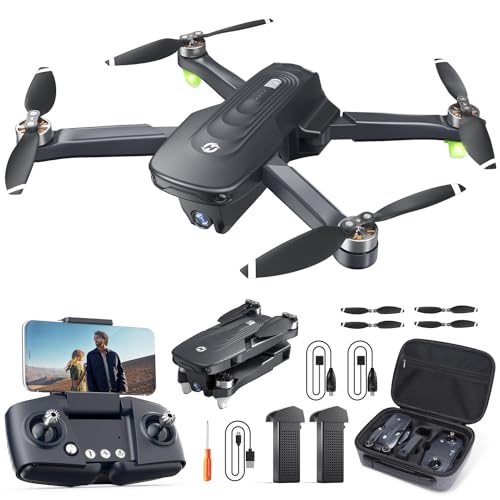
- 𝟒𝐊 𝐂𝐚𝐦𝐞𝐫𝐚 𝐟𝐨𝐫 𝐒𝐡𝐚𝐫𝐩, 𝐃𝐞𝐭𝐚𝐢𝐥𝐞𝐝 𝐒𝐡𝐨𝐭𝐬: Capture crisp photos and clear 4K video for trips, family moments, and everyday outdoor filming. The 110°
- 𝟗𝟎° 𝐀𝐝𝐣𝐮𝐬𝐭𝐚𝐛𝐥𝐞 𝐀𝐧𝐠𝐥𝐞 𝐟𝐨𝐫 𝐁𝐞𝐭𝐭𝐞𝐫 𝐅𝐫𝐚𝐦𝐢𝐧𝐠: Tilt the camera to get the angle you want, whether you’re filming a wide landscape, a top-down view, or a
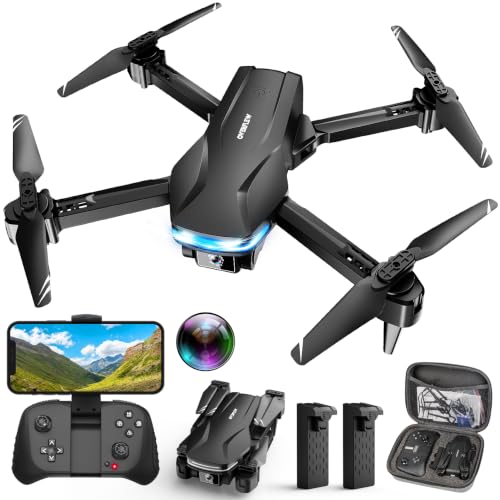
- 【Beginner-Friendly Flight Controls】One key takeoff and landing, altitude hold, headless mode and 3 speed modes help new pilots learn basic flight step by step. Start slow for
- 【1080P FPV Camera for Everyday Moments】 Connect with the Velcase VGO app to view live video, take photos and record casual moments from a simple aerial angle. The adjustable
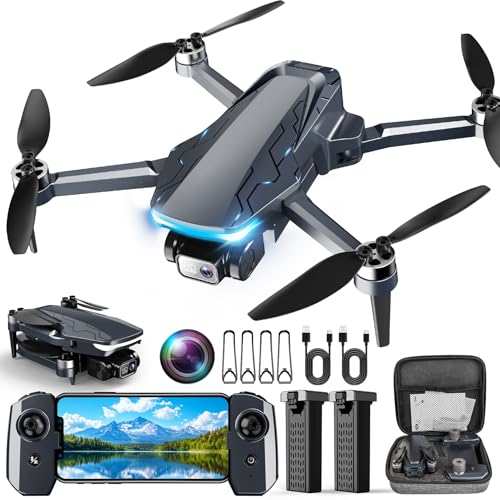
- 【2K HD Camera & 5G Real-Time Transmission】 Capture crisp 2K high-resolution photos and videos with smooth 5G Wi-Fi transmission for a stable, real-time viewing experience by using
- 【Advanced GPS Drone Flight System】 Featuring GPS positioning, our drones for adults offer intelligent flight features including: Precision Auto Return-to-Home (RTH) triggered by
How to choose
Gimbal or no gimbal. This is the biggest fork in the road. The DJI Mini 4K and Fly More Combo use a 3-axis gimbal; the HOVERAir X1 uses a triple stabilization system. The Holy Stone, Scrubuz and Velcase don't state mechanical stabilization. If your footage is going anywhere public, spend up.
GPS changes how you fly. The DJI Mini 4K pair, the Holy Stone HS175D and the Scrubuz all have auto return. On unfamiliar ground, in a place you may never visit again, that's insurance.
The 249 g line. The DJI Mini 4K, Fly More Combo, HOVERAir X1 (125 g) and Holy Stone HS175D all come in under 249 g, which the listings tie to no FAA registration or Remote ID for recreational US flying. Check the FAA site for your situation and check local rules at your destination separately.
Batteries are the real trip limiter. 31 minutes on one battery versus 93 across three is the difference between one flight and a shooting day.
Wind. The DJI Minis and the Scrubuz cite Level 5 wind resistance (38 kph for the DJIs). Coastal and mountain trips are windier than you plan for.
FAQ
Do I need to register any of these with the FAA? The DJI Mini 4K, DJI Mini 4K Fly More Combo, HOVERAir X1 and Holy Stone HS175D are all listed as under 249 g, and the DJI and HOVERAir listings state no FAA registration or Remote ID is required for recreational use. Verify on the FAA's official site — it's the only authority that counts.
Is $47 really enough for a GPS drone? The Scrubuz GPS Drone with Camera, 2K HD lists GPS positioning, Auto Return-to-Home, brushless motors and about 40 minutes across two batteries at $47.99. Expect 2K rather than 4K and no stated gimbal. Go read current buyer reviews before committing.
Which one films me while I'm moving? The HOVERAir X1 tracks at up to 15 mph with pre-programmed Follow, Orbit and Bird's Eye paths and takes off from your palm. The Holy Stone HS175D and Scrubuz both list Follow Me modes too, but they're controller-first drones.
Should I buy the base DJI Mini 4K or the Fly More Combo? Base set if you fly occasionally near power. Combo if you're traveling — 93 minutes of max flight time across 3 batteries versus 31 on one is the whole difference.
Related guides
- Expert Advice on Best drones, gimbals and content creator gear - camera drones, smartphone gimbals, action cameras, ring lights and stream decks
- Best drones, gimbals and content creator gear - camera drones, smartphone gimbals, action cameras, ring lights and stream decks for Families
- Best Providers for Best drones, gimbals and content creator gear - camera drones, smartphone gimbals, action cameras, ring lights and stream decks
Key Takeaways
- Choosing the right best foldable travel drones under $500 means matching the key features to your specific needs and budget
- Read real customer reviews and check the return policy before you commit
- Compare value across models — the priciest option is not always the best fit